



Description

LOW PROFILE FIT
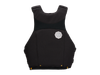
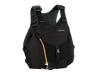
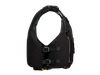
Articulated seams and super soft organic kapok provide a custom fit.

CONTOURED FIT
Articulated flotation eliminates bulk and maximizes range of motion.
LOW PROFILE FIT
Articulated seams and super soft organic kapok provide a custom fit.

ORGANIC KAPOK
Soft, organic Kapok conforms to the torso like no other buoyant material.
CONTOURED FIT
Articulated flotation eliminates bulk and maximizes range of motion.
Kapok are large trees that grow near the equator
Kapok (aka Ceiba Pentandra) are large deciduous trees of the bombax family (Bombacabeae). They grow near the equator in the upper canopy of the rainforest. Kapok are an important species within a healthy forest, and can grow up to 240 ft tall, 19 ft in diameter and over 700 years old!
The soft, almost cotton-looking fiber naturally falls to the ground
The benefits of Kapok trees were first discovered when locals found Kapok fiber floating in waterways during the dry season. After the tree has flowered and its leaves have fallen to the ground, the tree’s fruit or seed pods open to reveal a fluffy, white natural fiber.
The soft, almost cotton-looking fiber naturally falls to the ground and collects on the ground or on the surface of nearby bodies of water, since the fiber has a waxy inner coating and is naturally buoyant.
A naturally buoyant and soft fiber
Under a microscope, kapok fibers have the shape of oval bubbles, tapered on each end. This encapsulated, bubble-like shape has a cell wall that is covered with a thick layer of wax, and is what makes them naturally buoyant.
From use in softballs and mattresses, to boxing gloves and zafu stuffing, to life jacket buoyancy, Kapok fiber is cultivated and used commercially for various purposes.
Kapok is a warm, comfortable and sustainable alternative to foam in life jackets
Originally used in life jackets in the 1920s and 30s, Kapok was found to be a lighter and more comfortable alternative buoyancy to cork.
